
Financing the Smile: How Patient Payment Plans Increase Case Acceptance
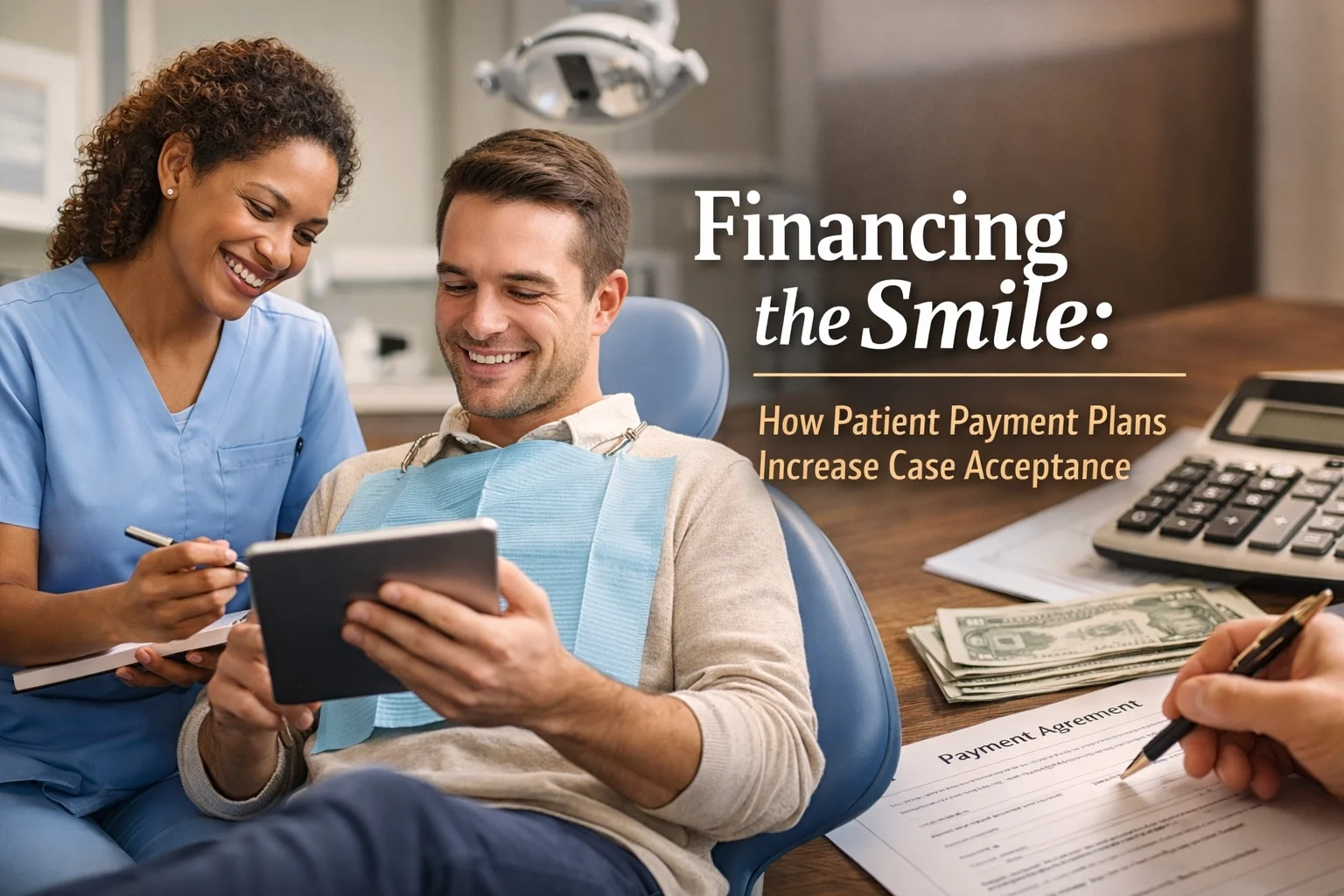
You just presented a treatment plan. The patient needs it. They want it. But they say no anyway.
Not because they don't trust you. Not because they're shopping around.
Because they can't afford $6,000 today.
That "no" isn't about your expertise or your chairside manner, it's about a single number that feels too big to say yes to. And if you're not offering affordable patient financing options for medical procedures, you're watching qualified, motivated patients walk out the door... and into practices that make it easier to say yes.
Here's the thing: case acceptance isn't a clinical problem. It's a financial one.
💰 The Real Reason Patients Decline Treatment
Let's get specific.
Cost is the #1 barrier to case acceptance in elective medical and dental practices. Not insurance confusion. Not fear of the procedure. Not lack of trust.
Money.
Even patients with insurance decline treatment when the out-of-pocket portion feels unmanageable. A $4,500 orthodontic case? A $7,200 LASIK procedure? A $3,800 cosmetic dentistry plan?
If you're asking for that total upfront, you're asking most patients to choose between your treatment plan and... groceries. Rent. Car payments. Life.
And they'll pick life every time.

Here's what happens next: they leave your office, feel guilty for a week, then quietly choose the competitor down the street who made financing feel easy.
🧠 The Psychology of "$147/Month"
There's a reason subscription services exploded over the last decade. Monthly payments rewire how we think about cost.
Imagine two conversations:
Conversation A:
"Your treatment plan is $6,000. How would you like to pay today?"
Conversation B:
"Your treatment plan is $147 per month for 48 months. Most patients find this fits comfortably into their budget. Should we move forward?"
Same treatment. Same total cost. Completely different emotional response.
When you present care as a manageable monthly investment instead of a lump sum, you remove the psychological barrier that kills case acceptance. Patients stop thinking "Can I afford this?" and start thinking "Can I afford NOT to do this?"
That shift is everything.
📈 What Happens to Case Acceptance When You Offer Financing
Let's talk numbers.
Practices offering medical payment plans for elective procedures see 20–30% higher acceptance rates for treatment plans over $1,500. Some practices using modern patient financing report acceptance rates hitting 90%, compared to the industry average of 50–60% for established patients and 25–35% for new patients.
Read that again: 90% case acceptance.
That's not a better sales pitch. That's not a charisma upgrade. That's financing.

Here's why it works:
✔ Removes the affordability objection before the patient even voices it
✔ Increases treatment plan value (patients opt for comprehensive care instead of partial fixes)
✔ Speeds up decision-making (no "let me think about it" delays)
✔ Improves patient satisfaction (they get the care they need without financial stress)
When financing is part of the conversation from the start, patients stop seeing treatment as a luxury purchase and start seeing it as an accessible solution.
🚀 The "One Application, 400+ Lenders" Advantage
Here's where most patient financing programs fall short: they route every patient through a single lender with rigid approval criteria.
If that lender says no? Your patient walks.
Clear Harbor Capital works differently.
One application. 400+ lenders competing to approve your patient. That means:
Higher approval rates (we match patients to the lender most likely to say yes)
Better terms (competitive rates, flexible repayment options)
Faster decisions (real-time approvals, no waiting days for an answer)
Think of it like this: instead of knocking on one door and hoping it opens, we're knocking on 400 doors simultaneously. Someone's going to say yes.
And when they do? You get paid upfront. The lender handles the payments. You eliminate the risk, the collections headaches, and the cash flow delays that come with in-house payment plans.

⚙️ How It Actually Works (It's Simple)
You don't need a complicated system. You don't need to become a finance expert. You need three steps:
Step 1: Present the treatment plan
Just like you always do. Explain the procedure, the timeline, the outcome.
Step 2: Mention financing as the default
"Most of our patients use flexible payment plans. Let's see what options work best for you."
You're not asking if they need financing, you're assuming it's part of the process.
Step 3: Submit one application
Your front desk (or the patient, via a secure portal) completes a single application. Within minutes, they see multiple approval offers with different rates, terms, and monthly payments.
That's it. No awkward money conversations. No surprise rejections. No "let me check with my spouse" delays.
💡 What This Means Beyond Case Acceptance
Here's what most practices miss: patient financing doesn't just close more cases today, it builds loyalty for tomorrow.
Patients who finance their care tend to:
✔ Return for follow-up visits (they're invested, literally, in the outcome)
✔ Accept future treatment plans (they already know financing is available)
✔ Refer friends and family (they want others to have the same easy experience)
You're not just increasing case acceptance. You're increasing lifetime patient value.
And because you're paid upfront by the lender, your practice gets immediate cash flow, no waiting 6–12 months for a patient to finish their payment plan. No risk of non-payment. No administrative burden tracking balances.
You focus on care. The financing handles itself.

🎯 Best Practices: How to Maximize Financing Impact
Most practices offer financing as a backup plan, something they mention only when a patient hesitates.
That's a mistake.
The most successful practices present financing proactively to every patient, regardless of income level or perceived ability to pay. Here's how:
1. Train your team to lead with options, not prices
Instead of: "This will cost $5,400."
Try: "Most patients use our flexible payment plans. Your monthly payment would be around $130."
2. Display financing information in your office
Waiting room signage. Treatment room posters. Website pages. Make it visible before the money conversation happens.
3. Normalize it in your language
"We work with over 400 lenders to make sure everyone finds a plan that fits."
Not: "Do you need financing?" (That sounds like you're assuming they're broke.)
4. Offer it to everyone
Don't assume who can or can't afford care. High earners use financing too, because they'd rather keep cash liquid than drop $8,000 on a procedure.
When financing becomes part of your standard process, case acceptance stops feeling like a sales challenge and starts feeling like a natural next step.
The Bottom Line
If you're presenting treatment plans and hearing "I need to think about it," you're not losing patients because of your clinical skills.
You're losing them because the upfront cost feels unmanageable.
Medical payment plans for elective procedures remove that barrier. They turn a $6,000 "maybe someday" into a $140/month "let's do this."
And when you combine flexible financing with access to 400+ lenders, you're not just increasing case acceptance, you're creating a patient experience that feels easy, transparent, and stress-free.
Your patients want to say yes. You just need to make it financially possible for them to do it.
Want to see how patient financing could impact your practice? Check out Clear Harbor Capital's medical lending solutions or explore how we help practices increase case acceptance without changing how they operate.
