
The Silent Revenue Leak: Why AI Receptionists Are Becoming the Standard in Healthcare Operations
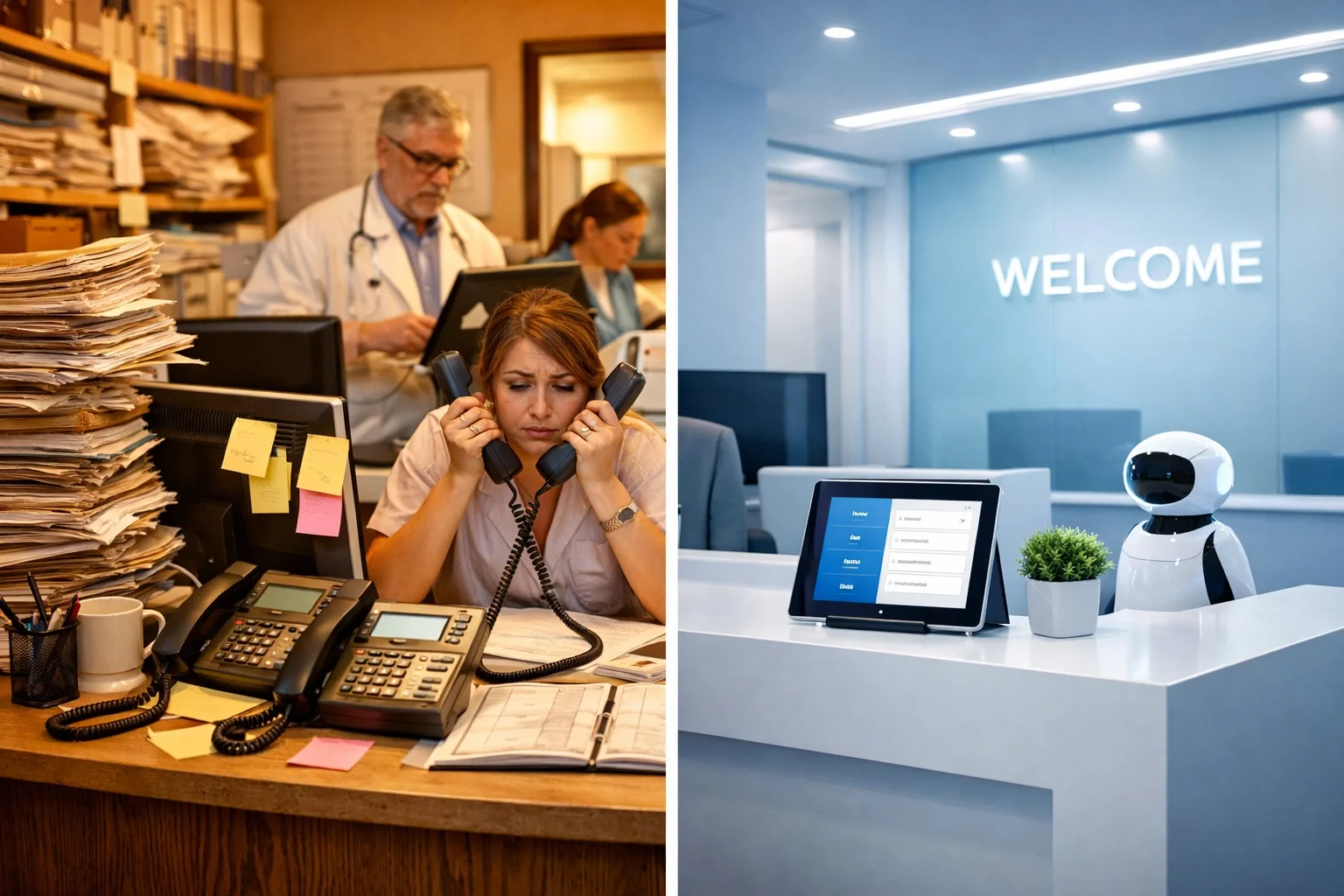
There's a phone ringing in a medical office somewhere right now. The front desk is juggling two patients at the counter, another call is already on hold, and the appointment system just froze for the third time today. The phone stops ringing. Another missed call.
That caller? They're already dialing the clinic down the street.
The Math Nobody Wants to Talk About
According to AnswerNet's research, 42% of calls to medical offices go unanswered during regular business hours. Not after hours. During the workday. While staff is present and theoretically available.
But here's where it gets worse.
Keona Health's data shows that 85% of people won't call back if their first attempt goes unanswered. They don't leave a voicemail. They don't try again later. They move on. They Google "urgent care near me" or call the next name on their insurance list.
Let's break down what this actually costs a mid-sized practice.

The $180,000 Question
Imagine a practice that receives 100 patient calls per month. If 30% go unanswered (which is actually below the national average), that's 30 missed opportunities every single month.
Now assume each new patient represents an average lifetime value of $500 per year: a conservative estimate for most specialties. That's $15,000 in potential revenue walking away every month. $180,000 per year.
And that's just from the calls. Dialog Health reports that the average cost of a patient no-show is $200 per appointment. For a practice experiencing 20 no-shows per month, that's another $48,000 in annual revenue vanishing into the schedule.
Industry analysis from Patient10x suggests that when you combine missed calls, no-shows, and scheduling inefficiencies, annual revenue loss can range from $100,000 to $500,000 for mid-sized practices.
The brutal part? Most practices don't even realize it's happening.
Why the Front Desk Can't Keep Up
This isn't about lazy staff or poor training. It's about math that doesn't work.
A human receptionist can handle one call at a time. Maybe two if they're skilled at juggling hold buttons. But when three calls come in simultaneously: and one patient is standing at the desk asking about insurance, and another is running late and texting: something has to give.
As highlighted in LinkedIn's analysis, dental and medical practices face a fundamental bottleneck: peak call times coincide with peak patient traffic. Monday mornings. Post-holiday weeks. Flu season. The times when practices need maximum availability are exactly when staff is most overwhelmed.
Enter the AI Receptionist
Platforms like Marblism have built AI voice agents specifically designed for medical environments. Not generic chatbots. Not offshore call centers. AI agents trained to handle healthcare-specific conversations with the compliance, empathy, and precision the industry requires.
Here's what that actually looks like in practice:
24/7 Call Handling
An AI agent like Marblism's Rachel doesn't clock out. It doesn't take lunch breaks or call in sick. A patient calling at 11 PM on a Saturday: when they finally remember they need to schedule that follow-up: gets answered. Immediately. And that call gets converted into a booked appointment.
Simultaneous Conversations
While your human staff handles one call, an AI agent can manage five. Ten. Twenty. There's no hold music. No "your call is important to us" message. Just instant, accurate responses.
Zero Fatigue, Zero Mistakes
At 9 AM, an AI agent is as sharp as it is at 5 PM. It doesn't mistype appointment times when it's been a long day. It doesn't forget to ask about insurance details. It doesn't accidentally double-book a slot because the screen didn't refresh.
What AI Agents Actually Do
The capabilities go beyond just answering phones:
Intelligent Scheduling
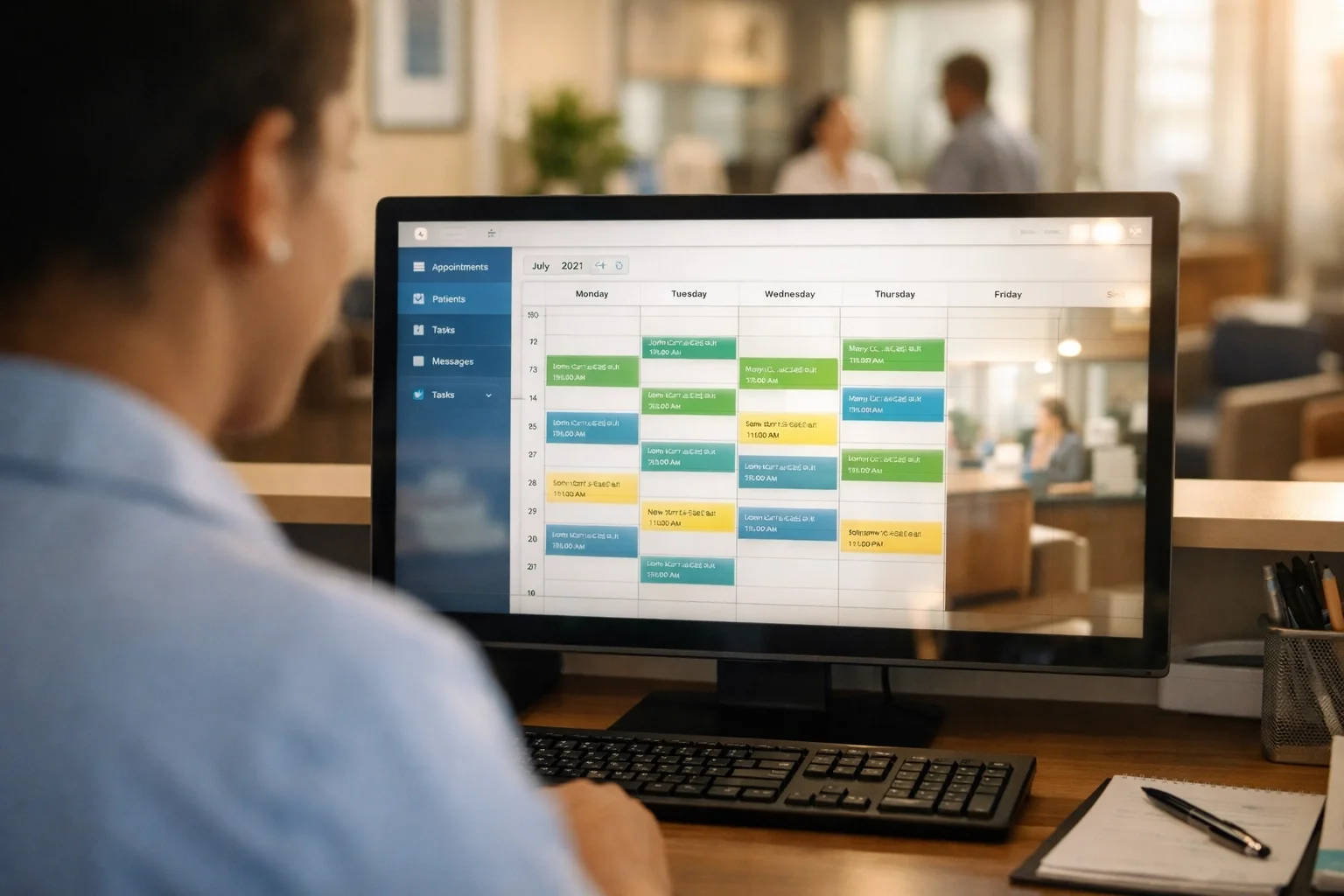
The AI cross-references provider availability, patient history, appointment types, and insurance requirements in real-time. It suggests optimal times, confirms appointments via text or email, and automatically sends reminders as the date approaches.
FAQ Automation
"What are your hours?" "Do you take my insurance?" "Do I need a referral?" "What should I bring to my appointment?" The AI answers these instantly: freeing up human staff for complex questions that actually require judgment.
Appointment Modifications
Patients can reschedule or cancel through the AI without waiting on hold. The system updates the calendar in real-time and offers alternative slots based on actual availability.
Pre-Visit Information Gathering
The AI can collect patient demographics, insurance details, and reason for visit before the appointment: data that used to take 10 minutes at check-in now happens before the patient even walks in the door.
The Ripple Effect
When you stop missing calls, something interesting happens downstream.
Your schedule fills more efficiently. Your no-show rate drops because automated reminders actually reach patients in their preferred format (text, email, voice). Your staff stops feeling overwhelmed by phone volume and can focus on patients who are physically in front of them.
The research from AnswerNet shows that practices implementing AI call handling see a 35-50% reduction in abandoned calls within the first 90 days. That's not marketing spin: that's measurable impact on the revenue leak we started with.
More importantly, patient satisfaction improves. People don't get frustrated waiting on hold. They don't feel ignored when calling after hours. They don't churn to competitors because they couldn't get through.
The Always-On Reality
Here's the part that's easy to overlook: AI agents don't just work more hours: they work every hour with the same level of accuracy.
A human receptionist who's been answering the same insurance questions for six hours straight is going to make mistakes. That's not a criticism. That's biology. Attention fades. Patience wears thin. Details get missed.
An AI agent at hour six is identical to hour one. The 200th call of the day gets the same precision as the first. There's no variability. No bad days. No burnout.
And because platforms like Marblism are purpose-built for healthcare, they're trained on medical terminology, HIPAA compliance requirements, and the nuanced conversations that happen in clinical settings. This isn't a generic voice assistant: it's a specialized tool designed to operate in regulated, high-stakes environments.
What This Actually Means
The shift to AI receptionists isn't about replacing human staff. It's about augmenting capacity in a way that was previously impossible.
Your front desk team can focus on the patient standing in front of them, knowing that incoming calls are being handled. Your practice can stay "open" for scheduling 24/7 without hiring a night shift. Your revenue stops leaking through the cracks of missed calls and forgotten follow-ups.
The practices adopting this technology aren't doing it because it's trendy. They're doing it because the math is undeniable. When 42% of calls go unanswered and 85% of those people won't call back, the status quo isn't sustainable.
The question isn't whether AI receptionists will become standard in healthcare operations. The question is how long practices can afford to wait before implementing them.
Clear Harbor Group helps medical practices optimize their operations through technology solutions designed for healthcare environments. Learn more about phone systems and AI reception or explore our medical practice solutions.
